
Huairou Commission Calls for Care, Land Rights, and Justice at CSW70
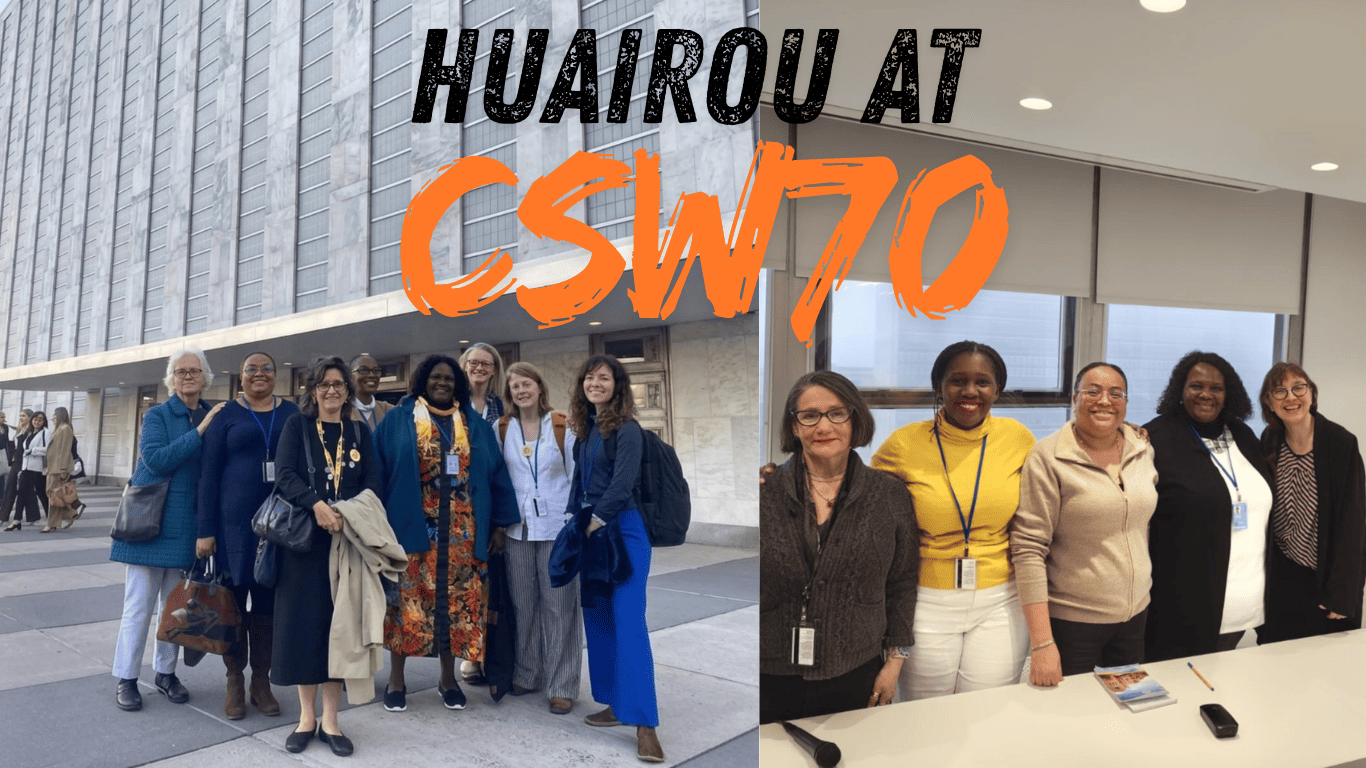
New York, USA – The Huairou Commission joined grassroots women leaders, civil society partners, and policymakers at the 70th session of the United Nations Commission on the Status of Women (CSW70), held from March 9-19, 2026 in New York City. The conference’s priority theme – Ensuring and strengthening access to justice for all women and girls, including by promoting inclusive and equitable legal systems, eliminating discriminatory laws, policies, and practices, and addressing structural barriers – placed Huairou’s advocacy squarely in the spotlight: that care is a human right, and that grassroots women must be at the centre of the laws and systems that govern their lives.
Huairou’s delegation consisted of:
- Violet Shivutse, Global Chair of the Huairou Commission
- Lana Finikin, Vice-Chair of the Huairou Commission
- Sandy Schilen, Executive Director of the Huairou Commission
- Mino Ramaroson, Global Land Specialist at the Huairou Commission
- Frances Birungi (through the International Land Coalition), Executive Director of Huairou member UCOBAC
- Shorai Chitongo, Grassroots Leader from Huairou member National Congress of Neighbourhood Women
Across the two-week programme, Huairou’s members and staff held speaking roles in six events and co-organised three sessions with partners including UN Women, Oxfam International, GEF Action Coalitions, the Global Alliance for Care (GAC) and Gender Action Tanzania (GATA).
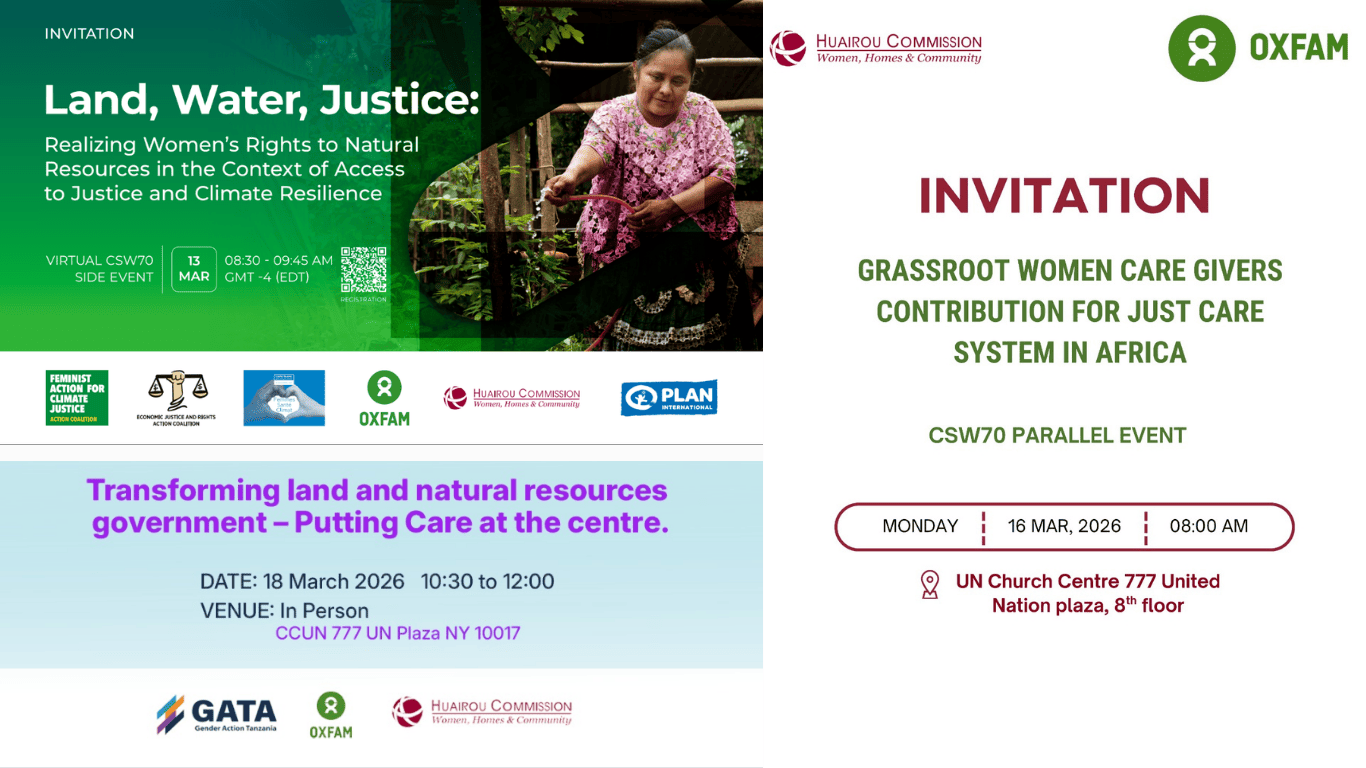
Posters of Events that Huairou Co-Organised at CSW70
When Laws Exist But Don’t Protect
Across every session Huairou participated in, one reality shaped the advocacy. Laws protecting women’s rights to land, care, and livelihoods exist in many countries, but legal recognition alone does not deliver justice. For grassroots women, discriminatory customary practices, weak institutions, and the absence of accessible, community-level legal mechanisms mean that formal protections remain out of reach. Huairou’s delegation named this gap directly, and called for justice mechanisms that actually function for women where they live.
In a session co-organised with GAC and Oxfam International titled Grassroots Women Caregivers: Contribution for a Just Care System in Africa, Violet Shivutse and Mino Ramaroson placed caregiving within the justice framework: the failure to recognise, support, and redistribute care is not a private or cultural matter. It is a rights violation, and it demands a legal and policy response.
Care, Land, and Justice as Interconnected Struggles
Huairou pressed a consistent argument across six speaking engagements: care does not exist in isolation. For grassroots women – farmers, pastoralists, Indigenous land stewards, and community caregivers across the Global South – the ability to care for families and communities is inseparable from access to land, water, and natural resources. When women are excluded from land rights, their unpaid care burdens increase, food security weakens, and economic independence narrows. A session co-organised with Oxfam International and GATA on transforming land and natural resource governance made this connection explicit: securing women’s land rights is a direct pathway to reducing inequitable care responsibilities and building community resilience.
From Commitment to Accountability
Huairou’s call to action at CSW70 was clear: the international instruments are in place. What is required now is implementation, financing, and accountability. Governments were called upon to secure women’s equal rights to land and natural resources, invest in care as a public good, and dismantle the structural barriers like discriminatory norms, extractive industries, and unequal access to justice systems that actively undermine women’s rights on the ground.
Building Toward CSW71 and CSW72
CSW70 strengthened HC’s alliances and sharpened its advocacy roadmap. New partnerships were established with organisations working across care, disability, labour rights, and agroecology, and momentum is growing toward CSW72 in 2028, where care is expected to take centre stage on the global agenda. Huairou is already working to shape that conversation with partners and allies, to make sure that grassroots women are not just voices to be included, but are experts whose knowledge and leadership must drive the priorities.
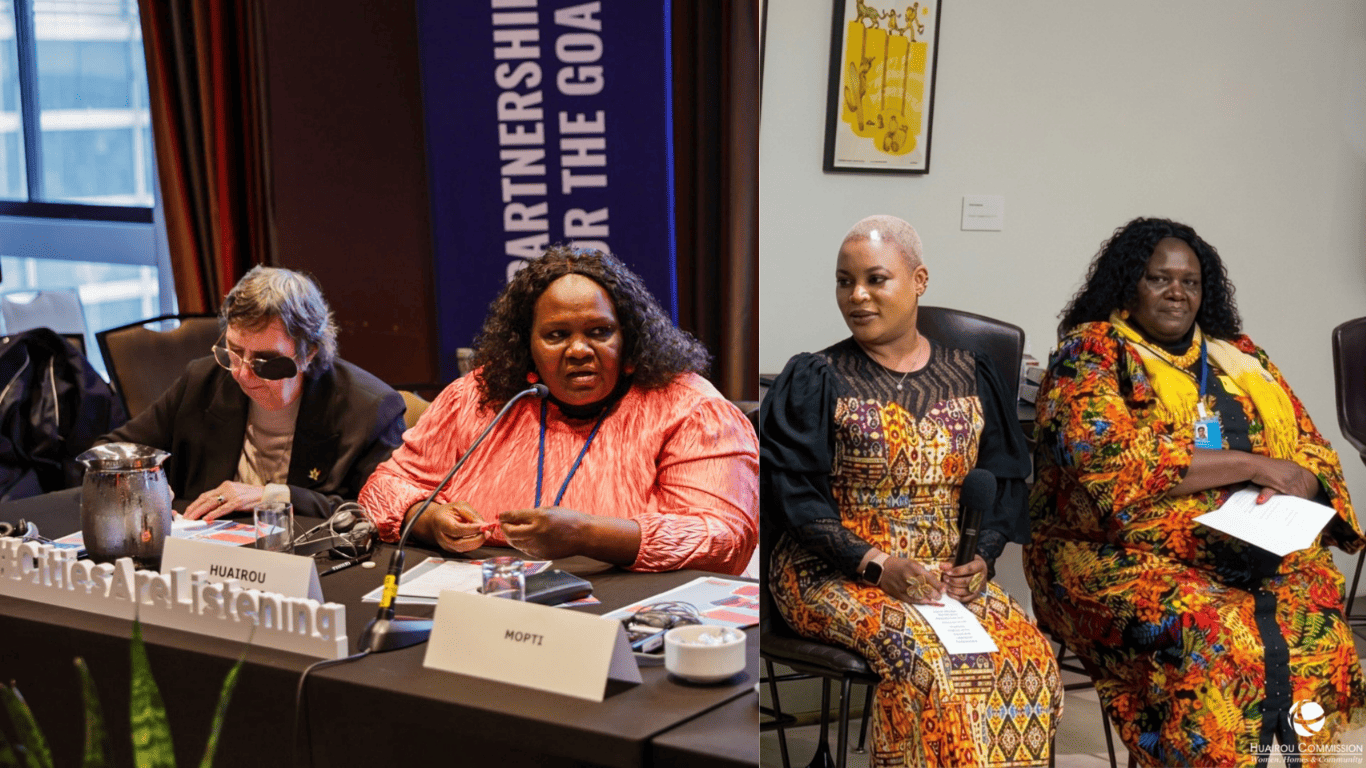
Violet Shivutse, Global Chair of Huairou Commission, speaking at CSW70